


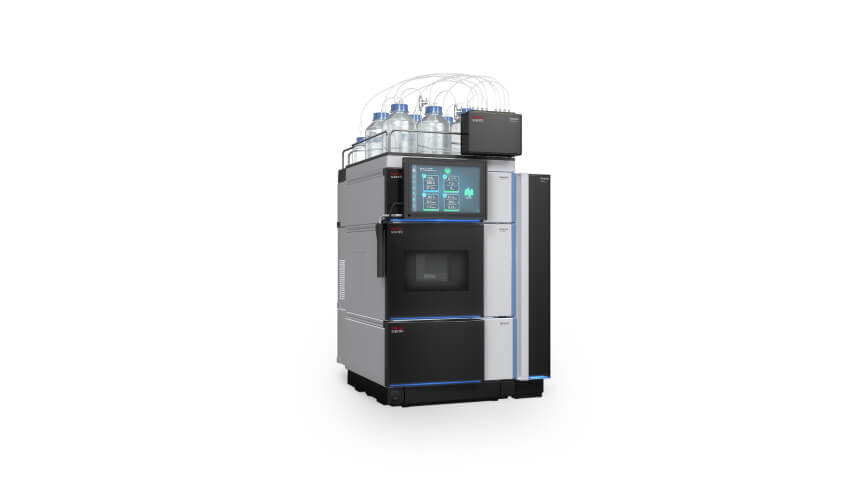
Vanquish Duo UHPLC Systems
Vanquish Horizon UHPLC System
Vanquish Flex UHPLC System
Vanquish Core HPLC System
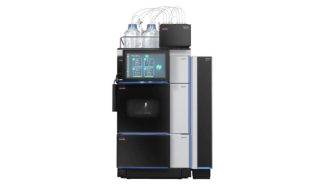
Vanquish Neo UHPLC System
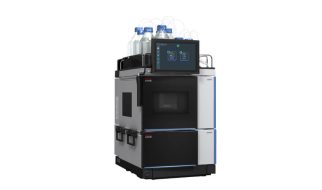
FAQ: Liquid Chromatography (LC)
1.High-Performance Liquid Chromatography (HPLC) is the gold standard for separating and analyzing substances in the liquid phase. It is widely used for pharmaceutical purity testing, food analysis, and environmental research.
UHPLC, such as the Thermo Scientific™ Vanquish™ platform, operates at significantly higher pressures. This enables the use of columns with smaller particle sizes, resulting in faster analysis, improved resolution, and reduced solvent consumption.
The selection depends on your analyte. For general applications, C18 columns such as Thermo Scientific™ Accucore™ or Thermo Scientific™ Hypersil GOLD™ are among the most popular due to their versatility with a wide range of compounds.
High pressure usually indicates a blockage within the system or the column itself. Regular filter replacement and the use of high-quality capillaries, such as Viper zero-dead-volume fittings, help maintain stable operating pressure.
Dead volumes are spaces within connections where the sample can accumulate and disperse, leading to broad or distorted peaks. Solutions featuring zero-dead-volume technology eliminate this issue and ensure maximum peak sharpness.
It depends on system usage and the types of solvents used. Preventive maintenance once per year or after a defined number of operating hours ensures precise performance and leak-free operation.
Beyond method optimization, the detector plays a crucial role. Advanced detectors such as Variable Wavelength Detectors (VWD), Diode Array Detectors (DAD), Charged Aerosol Detectors (CAD), or LC-MS systems significantly lower detection limits.
Air in the mobile phase can cause baseline fluctuations. High-quality HPLC systems include integrated degassers that remove dissolved gases before they reach the pump.
Gradient elution is the process of changing the solvent composition during analysis. It is necessary when the sample contains components with significantly different retention behaviors, ensuring all analytes elute within a reasonable time and with well-defined peaks.
10.Thermo Scientific™ Chromeleon™ CDS is a chromatography data system that integrates instrument control and data processing. It enables regulatory compliance, simplified peak integration, and faster report generation.