



FAQ - Glow Discharge Mass Spectrometry (GD-MS)
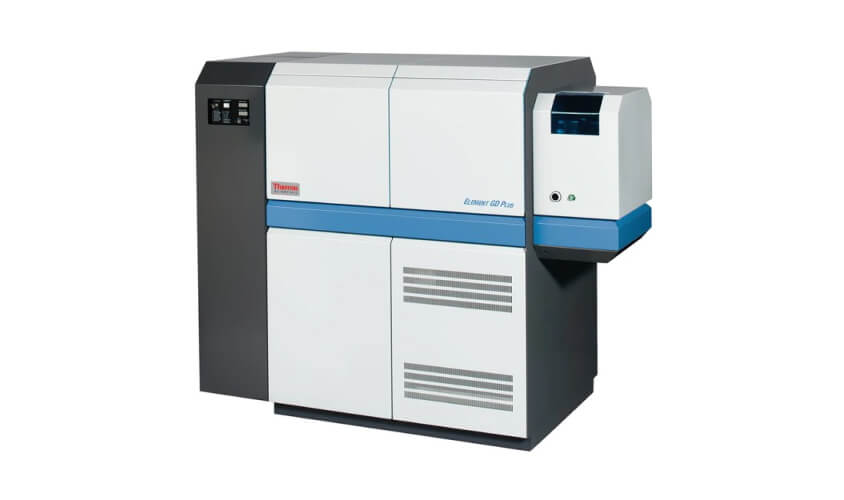
GD-MS uses an electrical discharge in a low-pressure gas, typically argon, to sputter atoms from the surface of a solid sample. The released atoms are ionized and subsequently analyzed by mass spectrometry. This method enables direct elemental determination in solid materials.
GD-MS enables the determination of numerous elements at very low concentrations, making it particularly valuable for high-purity material quality control. It is used to analyze pure metals, semiconductor materials, and other advanced materials where even minimal impurities may affect product properties.
GD-MS is used to examine metals, alloys, semiconductors, and other high-purity materials. With suitable preparation and source configurations, certain non-conductive materials, including ceramic powders, can also be analyzed. Analytical capabilities depend on sample form, conductivity, and material properties.
GD-MS enables direct analysis of suitable solid samples, while ICP-MS usually requires conversion of the sample into a solution. Direct analysis can reduce contamination risks associated with chemical preparation. Both techniques offer high sensitivity but differ in sample introduction, applications, and interference control.
Depth profiling involves monitoring changes in elemental composition as the analysis progresses deeper into a material. Controlled sputtering removes successive surface layers while their composition is measured over time. This approach is useful for studying coatings, diffusion zones, and layered materials.
Direct analysis eliminates the need for routine dissolution of suitable solid samples, reducing chemical consumption, preparation time, and contamination risks. It is particularly useful for materials that are difficult to dissolve and for applications requiring very low detection limits.
Sample preparation depends on material form, conductivity, and purity. Metal samples often require flat, clean surfaces, while powders and certain non-conductive materials require specialized preparation procedures. Avoiding surface contamination and ensuring stable discharge conditions are essential.
In the semiconductor industry, GD-MS is used to monitor Thermo Scientific™ trace™ impurities in high-purity materials. Certain metallic and other elemental impurities can affect electrical properties and component reliability, making impurity monitoring important during production and quality control.
Elemental concentrations are calculated from measured ion signals using appropriate relative sensitivity factors and calibration procedures. When suitable reference materials are available, they help improve quantitative analytical accuracy.
GD-MS is used in high-purity material production, semiconductor manufacturing, specialty metals, electronic components, and advanced functional materials. It is particularly valuable when extremely low impurity concentrations affect product quality, performance, or reliability.