Kern has been producing precision balances for 175 years. Today, the range of Kern’s products is much broader and includes analytical balances, moisture analyzers, industrial scales, test weights, as well as microscopes.
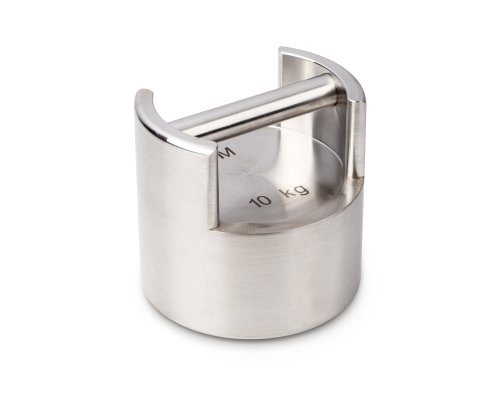
Basic balances (school and pocket balances) as well as test weights are available too. Even though weights have always been used to carry out weighing procedures, this original purpose has almost disappeared. Today, they are almost exclusively used for adjusting and testing, i.e. calibration of electronic balances.
Scales, Weights and Microscopes
SKU: 8429

Available in countries :
Models
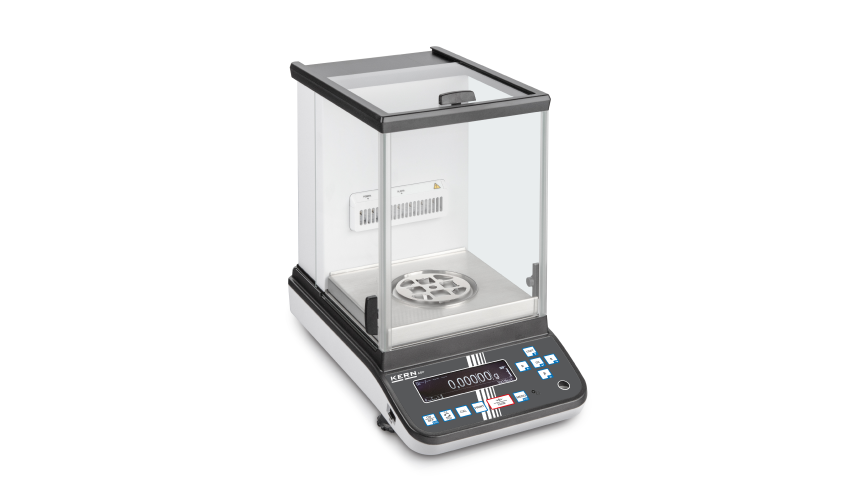
Analytical balances
To satisfy stricter requirements for precision, speed, and reproducibility of weight values, monolithic balance cells are increasingly the standard.
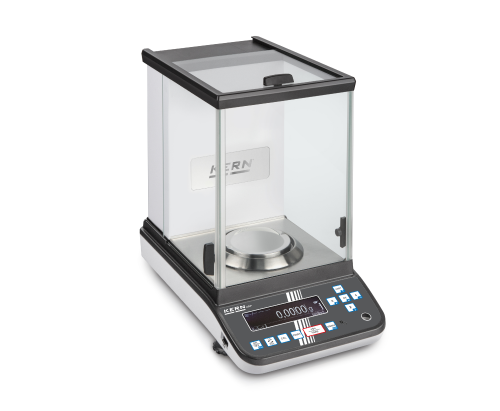
Analytical balance is used in every laboratory that needs some kinde of precise measurment. Every Kern analytical balance can be equiped with internal calibration weight for easy adjusment of the balance. Kern offers a wide range of analytical balances form school models for training of personel to premium models with ionizer and 0,001 mg readability.
Recommended models:
- ABP series premuium analytical balance with optional ionizer
- ABJ series proven as high performance analytical balance
- ALJ series Analytical balance with high measuring range and recipe function
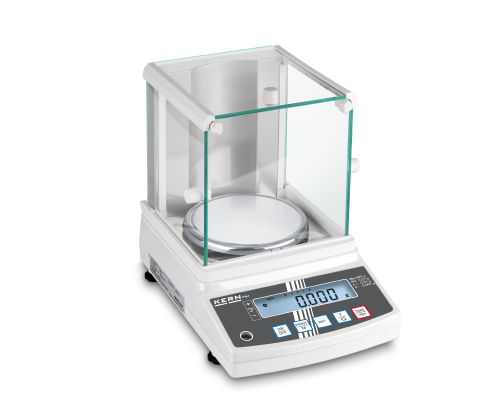
Precision balances
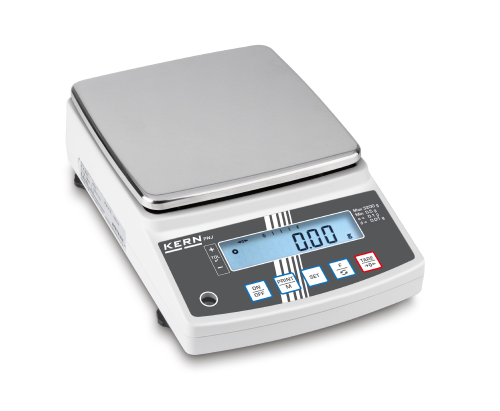
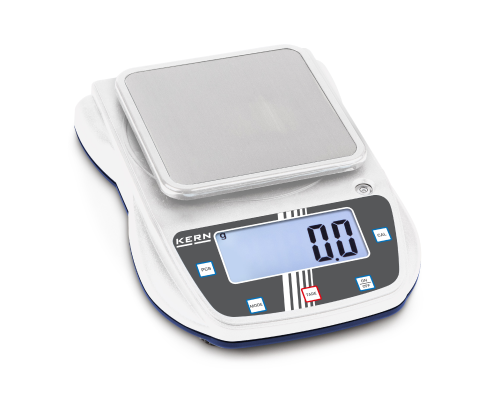
Precision balances are used in labs to efficiently perform tasks such as weighing test materials and sampling amounts, formulation, density determination, purity analysis, quality control testing as well as material and conformance testing. Best in class price to value ratio, wide selection of different models, Kern proven durability and longevity.
Recommended models:
- PBJ series Multifunctional laboratory balance with single-cell weighing system
- PNJ series New standard in laboratory balances with automatic internal adjustment
- EG series Classic balance with robust tuning fork measuring system
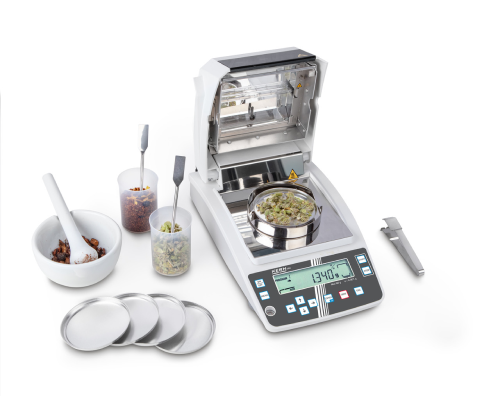
Moisture analyzers
Moisture analysing is an integral part of many raw and finished products and has a crucial influence on the quality of the product. Kern moisture analysers are fast, easy to use, durable and precise.
Recommended models:
- DBS High-quality single-cell weighing system for outstanding stability, reliability and response time
- DAB model with high-quality halogen quartz glass heater available with 10mg readability idela for rapid tests
Industrial scales
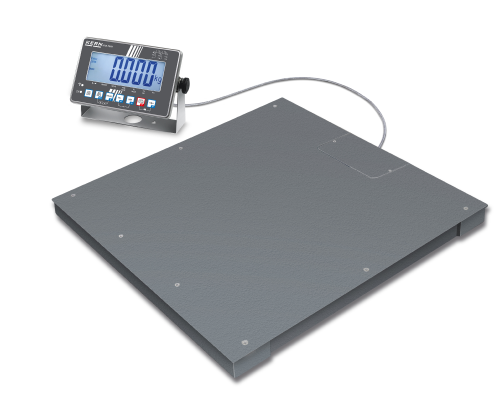
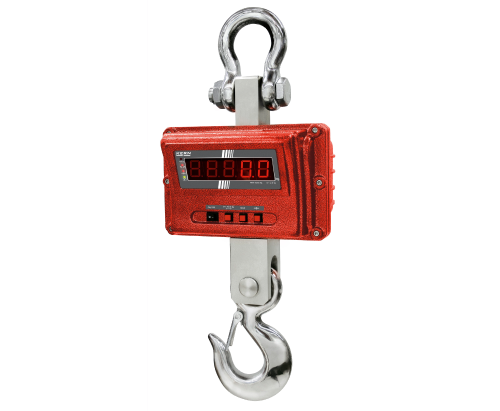
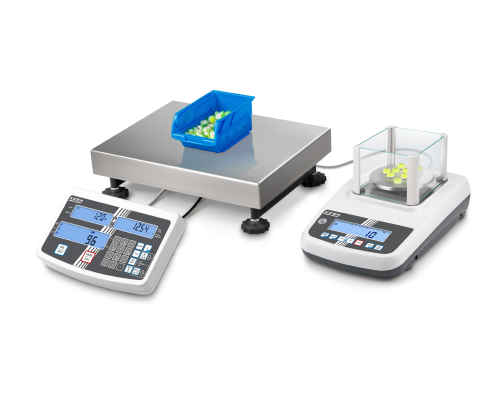
Kern offers various types of industrial scales such as platform, floor, pallet truck, hanging / crane scales, counting, price computing, food as well as practical and simple bench scales.
Recommended models:
- IXS platform scale with IP68 rating and XL-diplay unit
- FKB Bench scale with high resolution and large weighting surface
- BFN Stainless steel floor scale with IP68 rating, stainless steel display device with IP65 rating
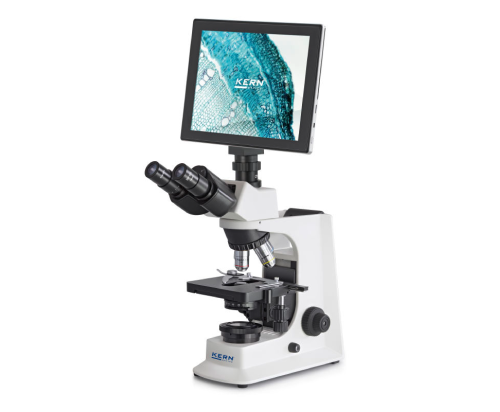
Microscopes
When developing microscopes Kern have concentrated on the very best optical quality an have used only high-quality glass and the latest tehnology to achive this. The high quality Philips halogen and LED ilumination produces razor-sharp images with high contrast. These images will impress you with their high contrast and true colors display.
Recommended models:
- OBL Best selling, flexible laboratory microscope with infinity optical system and Koechler ilumination
- OPO Powerful polarisnig microscope for all applications with reflected and transmitted light
- OZL Affordable stereo zoom microscope for quality control
What is readability?
Readability, or the “d” value, represents the smallest increment the balance can display (e.g., 0.001 g).
What is the minimum weight?
The minimum weight is the lowest amount a balance can measure while still meeting accuracy requirements. It is crucial for determining whether a balance is suitable for small-sample applications.
What is the difference between analytical and precision balances?
- Analytical balances offer readability down to 0.01 mg and include a draft shield.
- Precision balances have lower readability (0.1 mg – 0.01 g) and are used for routine measurements.
How does a KERN moisture analyzer work?
The moisture analyzer measures the loss of mass during sample heating and automatically calculates the moisture percentage.
What is the difference between halogen and infrared heating technology?
Halogen heaters provide faster and more uniform heating compared to conventional infrared sources.
What is the typical moisture measurement readability?
Models such as DBS 60-3 offer a readability of 0.001 g and moisture readout up to 0.01%.
How is the drying temperature determined?
The temperature is set according to the sample type (grains, food, pharmaceuticals), typically between 40°C and 199°C.
When to use a compound microscope?
If you are viewing very small specimens such as blood samples, bacteria, parasites, algae, tissue, and thin sections of organs, you will need a compound microscope. High magnification allows accurate detail observation. A typical compound microscope has 3–5 objective lenses ranging from 4x–100x. With a 10x eyepiece and 100x objective, total magnification can reach 1000x.
When to use a stereo microscope?
A stereo microscope is ideal for viewing larger specimens such as insects, leaves, gemstones, and rocks. Lower magnification is required, typically ranging from 6.5x–45x. Stereo microscopes use two optical paths, providing natural depth perception for opaque and 3D objects.
What is depth of field?
Depth of field (DOF) is the portion of the specimen that remains in focus at the same time. It is influenced by objectives, eyepieces, and optical design. As magnification increases, depth of field decreases.