


Belec Compact Port HLC

ARL SMS-3500 Automation for Twin OES or XRF

ARL SMS-3300 Automation for Single or Twin OES or XRF

ARL SMS-2300 Robotics-Based Automation for OES or XRF

ARL iSpark 8860 Fire Assay Analyzer

ARL iSpark Series Optical Emission Spectrometer

ARL easySpark Metal Analyzer

FAQ - Optical Emission Spectrometry (OES)
A spark OES spectrometer uses an electrical discharge between an electrode and a metal sample to excite atoms. As the atoms return to lower energy states, they emit light at characteristic wavelengths. The intensity of these emission lines is measured to determine elemental concentrations.
OES is used to analyze steel, cast iron, aluminum, copper, nickel, titanium, and other metal alloys. With appropriate calibrations, major alloying elements and selected Thermo Scientific™ trace™ elements can be determined. Analytical capabilities depend on the instrument configuration and available methods.
Spark OES can determine carbon and sulfur using their characteristic emission lines. These elements significantly affect the mechanical and processing properties of steel, making accurate measurement essential in metallurgy. Reliable results require suitable optics, calibration, and surface preparation.
The metal sample must have a flat, clean, and representative surface free from oxides, coatings, and contaminants. Preparation is usually performed by grinding or milling, depending on the metal. Improper preparation may cause unstable electrical discharge and inaccurate results.
Argon provides a controlled atmosphere during electrical discharge and reduces interference from atmospheric oxygen and nitrogen. Gas purity and stable flow are particularly important when measuring low elemental concentrations. Gas requirements depend on the instrument design and analytical method.
Yes, OES enables identification and classification of metal alloys based on their measured chemical composition. Elemental concentrations are compared with relevant specifications and material grade standards. This capability is particularly useful for incoming material inspection and final product quality control.
Stationary OES systems are designed for laboratory sample analysis and often provide higher automation and stable measurement conditions. Portable OES spectrometers enable testing of large metal structures and components that cannot easily be transported to a laboratory. Selection depends on the measurement location and required performance.
Calibration is performed using certified reference materials with known chemical compositions that match the analyzed alloy type. Their emission signals are used to establish the relationship between signal intensity and elemental concentration. Regular verification and instrument standardization help maintain reliable results.
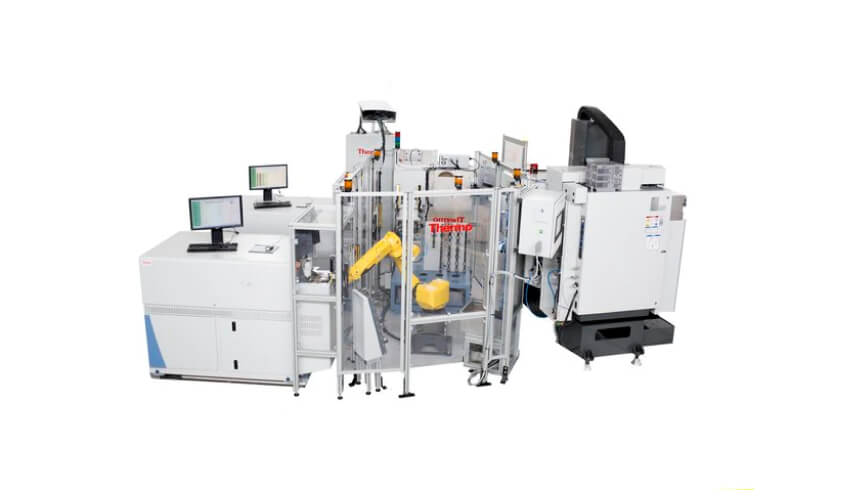
Automated OES systems can integrate sample preparation, positioning, analysis, and data processing into a single workflow. This reduces manual handling, improves reproducibility, and accelerates chemical composition monitoring during production. Such systems are particularly useful in steel plants and large foundries.
OES precision is influenced by sample homogeneity, surface condition, excitation source stability, argon purity, and calibration quality. Proper electrode maintenance, controlled measurement conditions, and reference materials matching the analyzed alloy are also important.