TOC Analyzers

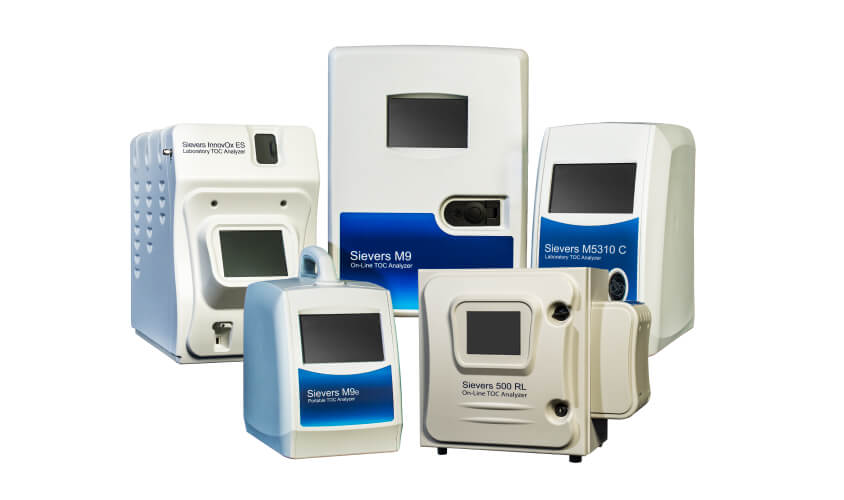
As one of the world’s leading manufacturers of total organic carbon (TOC) analyzers and analytical instruments, SUEZ provides superior technology, design and quality. TOC analyzers oxidize the organic carbon in a sample to CO2 and measure the CO2 produced, thus indirectly analyzing organic molecules present in a sample and indicating water quality. Sievers TOC Analyzers rely on the patented Membrane Conductometric technology, which enables interference-free measurements and prevents false high or low readings occurring in TOC analyzers based on Direct Conductometric technology. These analyzers cover a dynamic analytical range from 0.03 ppb up to 50,000 ppm and provide solutions across diverse industries and applications - cleaning validation and verification technologies, conductivity mesaurement, treatment optimization, regulatory compliance, and process control. Sievers TOC Analyzers are available as a lab, portable or On-Line unit, providing ultimately flexible solutions to the customers, no matter what their application needs are.

Sievers TOC Standards and Vials
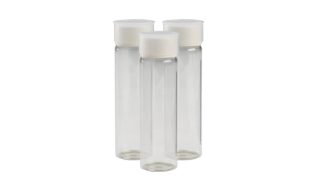
When measuring TOC in a laboratory or cleanroom, it is of big importance to minimize contamination risks and eliminate test variables in every analysis. When reference materials are not made from the highest quality components ...
Read more

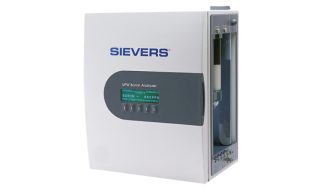
Sievers UPW Boron Analyzer

The Sievers Boron Analyzers is suitable for deionized ultrapure water applications, where it enable continuous, unattended online monitoring of ultra-low levels of boron. This analyzer is able to run 10 samples per hour and has...
Read more

Sievers CheckPoint Portable / On-Line TOC Sensor
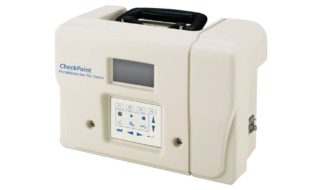
The Sievers CheckPoint Portable (On-Line) Total Organic Carbon (TOC) Sensor allows superior flexibility when measuring low level TOC. It can be used on-line for continuous monitoring or carried to any point in a water system. T...
Read more

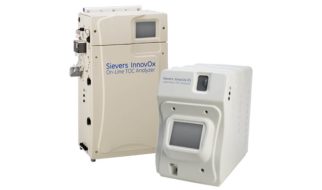
Sievers InnovOx TOC Analyzers

Sievers InnovOx Total Organic Carbon (TOC) Analyzers are designed to measure organic carbon across a broad range of water samples ranging from industrial process water and wastewater to concentrated brine streams. Featuring a d...
Read more

Sievers M5310 C TOC Analyzers

Sievers M5310 C Total Organic Carbon (TOC) Analyzers are designed for the drinking water industry and environmental water quality monitoring. With an operating range of 4 ppb to 50 ppm, Sievers M5310 C TOC analyzers are enginee...
Read more

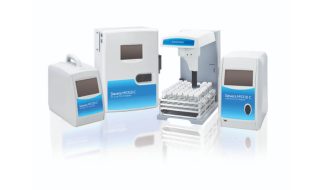
Sievers M9 TOC Analyzers

Sievers M9 Total Organic Carbon (TOC) Analyzers provide stable and accurate data for ultrapure and pharmaceutical water monitoring, cleaning validation as well as other applications. Relying on the Sievers Membrane Conductometr...
Read more

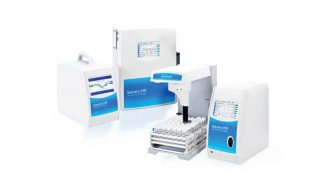
Sievers M500 Online TOC Analyzers

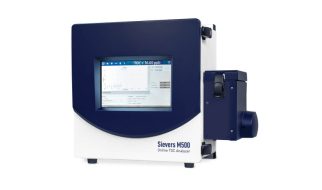
The Sievers M500 is the third generation online Total Organic Carbon (TOC) analyzer based on Sievers' reagentless Membrane Conductometric technology. The M500 improves SUEZ's industry-leading technology and introduces new featu...
Read more

Sievers Eclipse Bacterial Endotoxins Testing (BET) Platform
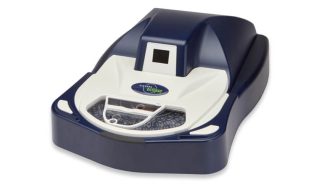
The Sievers Eclipse is an innovative platform that decreases assay setup time by up to 85% and reduces Limulus Amebocyte Lysate (LAL) reagent use by up to 90% while meeting all requirements of the harmonized pharmacopoeia (EP 2...
Read more

FAQ: TOC analyzers

What is a TOC analyzer and what is it used for?

A TOC analyzer is a laboratory or process instrument used to measure Total Organic Carbon (TOC) in water, which is a key indicator of organic contamination.

Why is TOC analysis important in the pharmaceutical industry?

TOC analysis of water is a regulatory requirement for the control of Purified Water (PW) and Water for Injection (WFI). Measuring total organic carbon helps detect organic contaminants that may affect the safety and efficacy of pharmaceutical products.

What is the measurement range of a TOC analyzer?

Modern TOC analyzers cover a wide concentration range, from low ppb levels (ultrapure water) to several thousand ppm (industrial and wastewater samples). The choice of model depends on the sample type, expected TOC levels, and regulatory requirements.

Which oxidation methods are used in TOC analysis?

The most common methods include UV/persulfate oxidation and high-temperature catalytic oxidation. These methods ensure reliable and precise conversion of organic matter into CO2, enabling accurate measurement of total organic carbon.

What is the difference between a laboratory and an online TOC analyzer?

Laboratory TOC analyzers are used for discrete testing of individual water samples. Online TOC analyzers enable continuous real-time monitoring of TOC levels in process systems, with automatic alarms and integration capabilities into SCADA or LIMS systems, which is essential for pharmaceutical and industrial production.

Does a TOC analyzer require calibration?

Yes. Regular calibration with certified standards ensures accuracy and reliability of results. The calibration interval depends on the instrument type, measurement frequency, and regulatory requirements, but it is typically performed semi-annually or annually.

How are TOC analyzers integrated into LIMS or SCADA systems?

TOC instruments support standard digital communication protocols (Modbus, 4-20 mA, Ethernet) for automatic data transfer. This ensures full traceability of measurements and easy integration into Laboratory Information Management Systems (LIMS) and industrial SCADA platforms.

What are typical applications of TOC water analysis?

Applications include pharmaceutical water control (PW, WFI), drinking water monitoring, process water control in microelectronics, industrial production monitoring, and wastewater analysis.

How long does it take to analyze a single sample?

Analysis time depends on the method and instrument model, but typically takes a few minutes per sample. Online TOC systems enable virtually continuous monitoring without interrupting operations.

How to select the appropriate TOC analyzer?

The selection depends on sample type (laboratory or process), expected TOC concentration range, need for online or offline measurement, and regulatory and industry requirements. Professional consultation and assessment of needs enable optimal model selection.