


UV-Vis and Vis Spectrophotometry
Thermo Scientific™ UV-Vis and Vis instruments are designed to streamline measurements with consistent, high-quality results, time after time, which enables a qucik and easy way from samples to answers. Whether for classroom teaching, rout...
Read more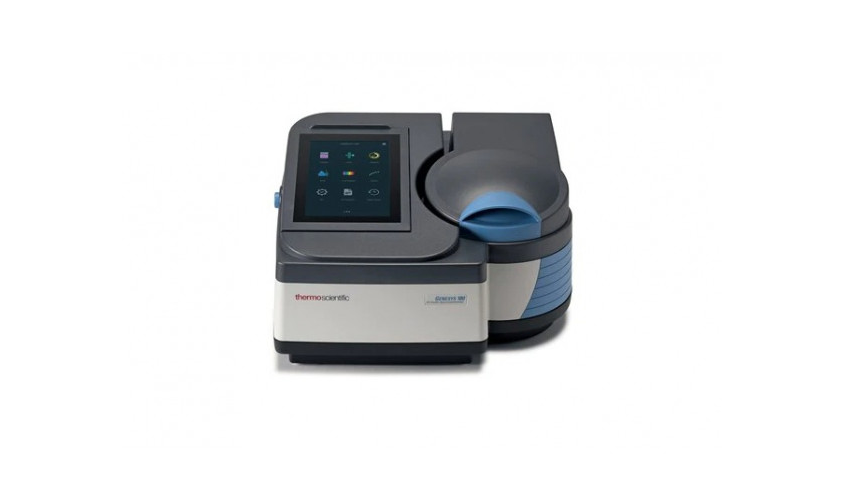
Fourier Transform Infrared (FTIR) Spectroscopy and Microscopy
Fourier Transform Infrared (FTIR) spectrometers are used for a qualitative and quantitative analysis of a broad range of organic and inorganic samples in academic, analytical, QC/QA, and forensics laboratories. FTIR is frequently used fo...
Read more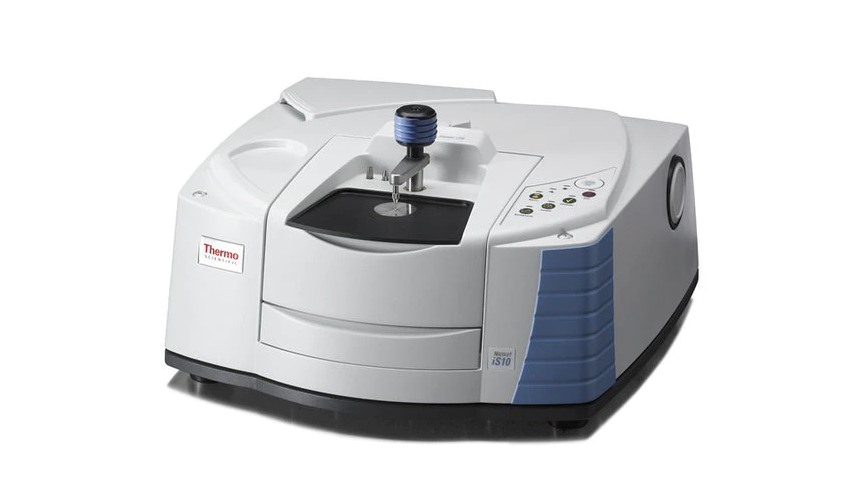
Near Infrared (NIR) Spectroscopy
Thermo Scientific™'s rugged and reliable near-infrared (NIR) analyzers can help you optimize your processes, increase manufacturing efficiency, and lower production costs. Being offered as lab, plant and field systems, NIR analyzers provi...
Read more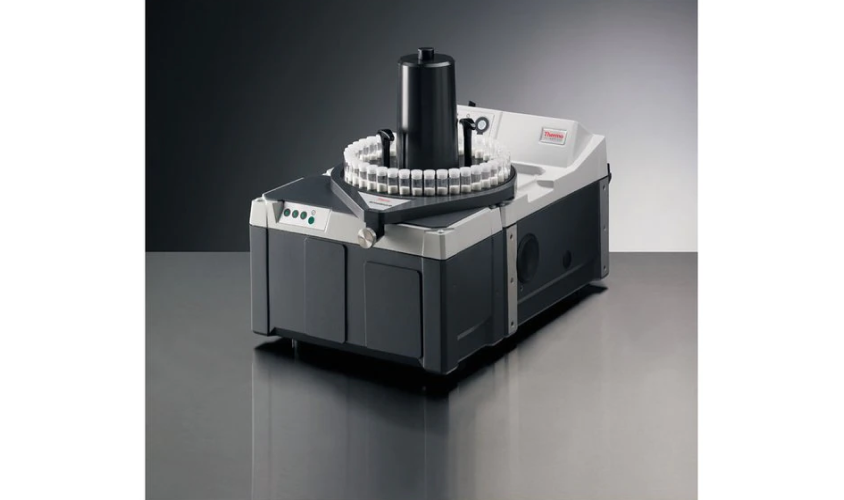
Raman Spectroscopy and Raman Microscopy
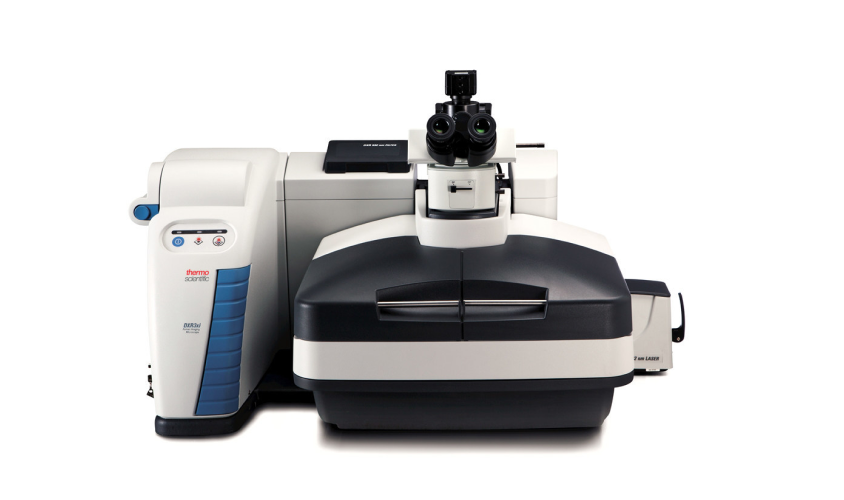
The Thermo Scientific™ DXR3™ Raman family of instruments provides advanced imaging capabilities such as particle analysis and 3D confocal imaging, while improving stability and expanding laser and camera offerings. These capabilities are i...
Read more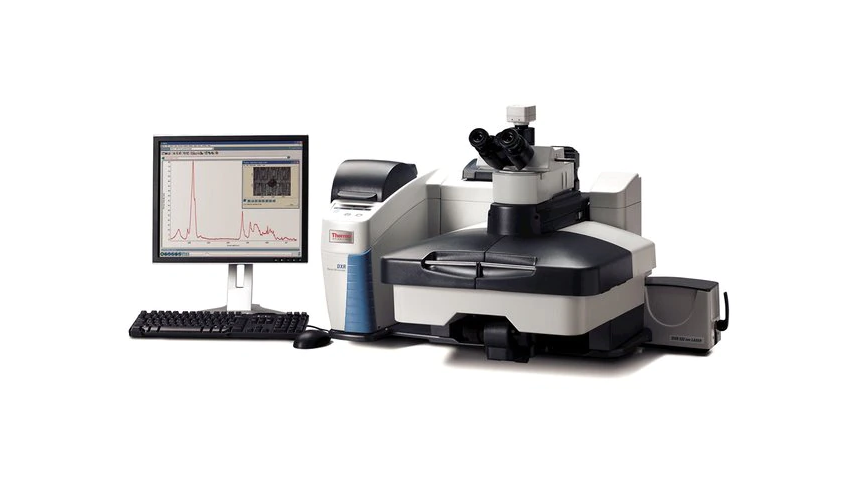
Molecular Spectroscopy Applications
FAQ: Molecular Spectroscopy
The Thermo Scientific™ DXR3™ Raman Microscope offers spatial resolution as fine as 540 nm and confocal depth resolution down to 1.7 μm on ideal samples.
Point, line, area
It supports multiple excitation lasers: 455 nm, 532 nm (high brightness/power), 633 nm, and 785 nm, and 1064 nm with FT Raman module. We can offer portable units with 785 nm and 1064 nm lasers.
Yes! Automated alignment is there to ensure visual, excitation laser and Raman scatter are precisely aligned to the same spot. Automated alignment software-controlled tool includes all calibration standards for automated calibration (wavelength, Raman intensity and laser) and automated alignment of visual, excitation laser and Raman scatter beam paths. All this in less than a few minutes!
Yes, it can perform point-and-shoot sampling through plastic bags, glass containers, and blister packs with both portable and lab spectrometers
You can analyze particles down to a few microns. Thermo FT-IR microscope can analyze samples as small as 3 microns with a MicroTip Ge ATR crystal. Room-temperature detectors are suitable for samples down to 50 microns, eliminating the need for LN2 in many routine applications. Higher-sensitivity MCT detectors generally require cooling but enable analysis down to the micron level.
We can offer different models that can accommodate samples up to 40 mm thick and 5 kg in mass, or standalone microscope up to 20 mm with standard holders.
Yes, both FT-IR and Raman microscope offer IMAGING analysis or upgrade to imaging.
We can offer different modules for upgrade: ATR, HATR, specular reflectance, diffuse reflectance, PIKE, Specac modules, sample compartment Raman accessory, NIR module with Integrating Sphere and Fiber Optic connections, TGA-IR accessory, GC-IR module.
The choice depends on the application and the nature of the analyte. If the analyses involve organic molecules, nucleic acids, proteins, or pharmaceutical substances, the UV range (190-380 nm) is essential. For colorimetric analyses, quality control, water testing, and food samples, the VIS range (380-900 nm) is often sufficient.