


Process Equipment for Water Analysis and Monitoring
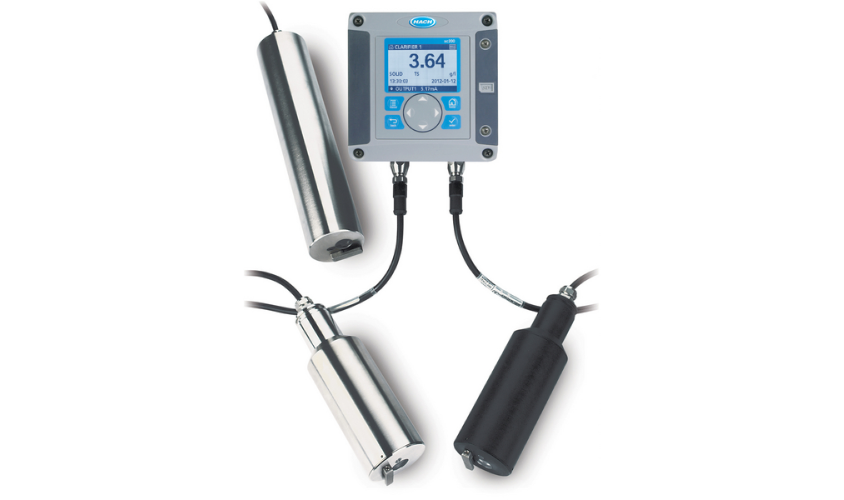
Online Analysers
Hach offers a broad range of online analyzers for various parameters such as chlorine, ammonium, chlorine dioxide, phosphate, fluoride, sodium, silica, ozone, as well as harndess, particle counting, turbidity, nutrients and TOC. In addit...
Read more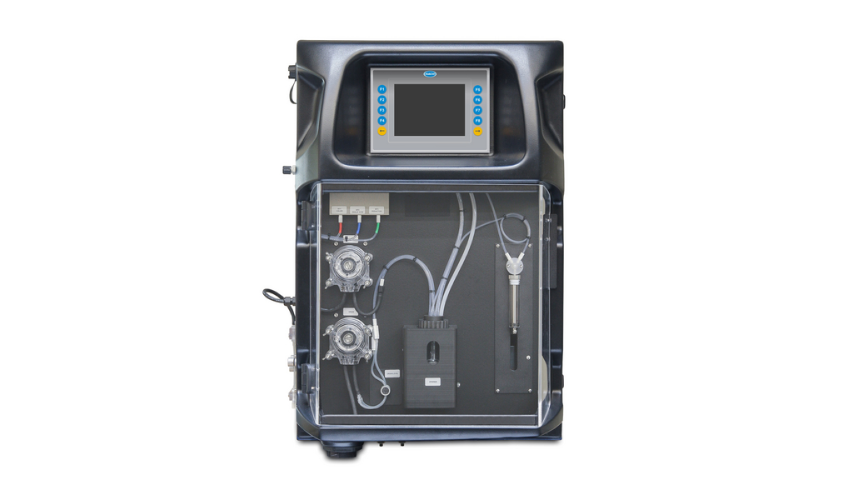
Controllers and Sensors
Hach provides different digital controllers (i.e. transmitters), analogue controllers as well as a broad range of sensors including pH and ORP sensors, Dissolved Oxygen Sensors, Conductivity Sensors and more. While Analog Controllers pr...
Read more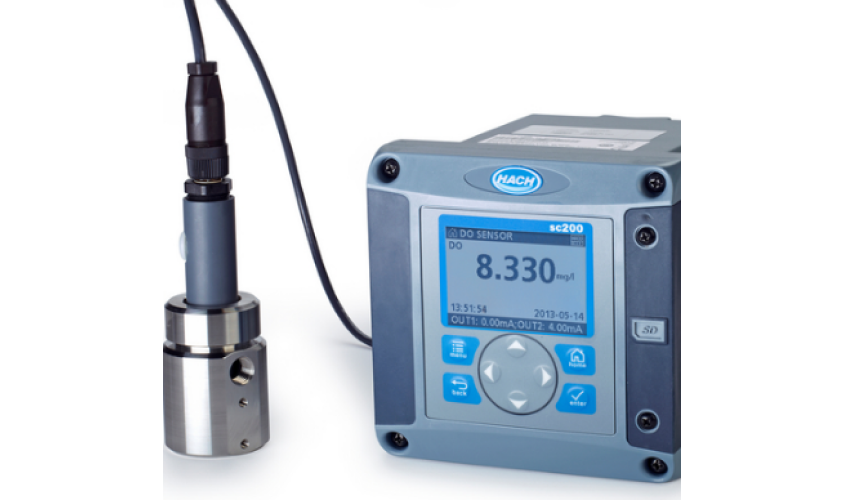
Samplers
As accurate analysis begins at the sample point, Bühler vacuum samplers help you obtain a representative sample for subsequent analysis with your Hach lab instrument, ultimately leading to accurate reporting. With an improved software sy...
Read more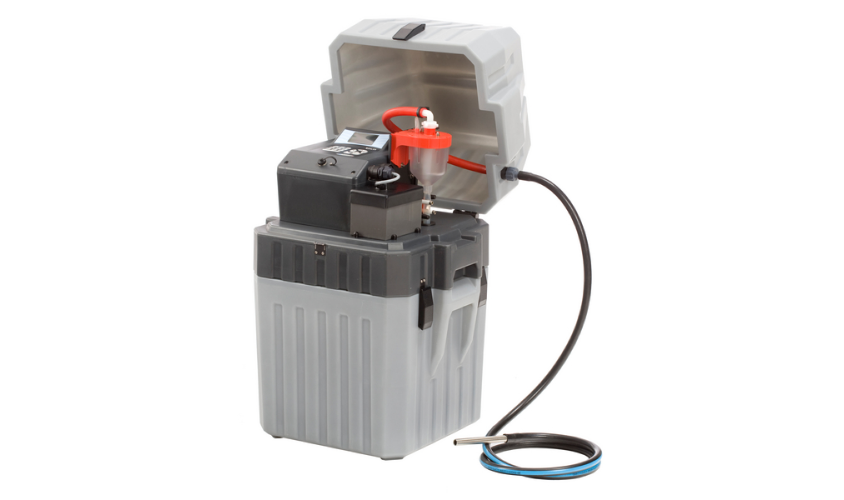
FAQ: Process Equipment for Water Analysis and Monitoring
For online measurement, analyzers such as the CL17sc are recommended. It uses the DPD colorimetric method and provides stable results with minimal maintenance. For manual verification, instruments such as the DR300 or DR3900 are used.
For drinking water treatment plants, the standard solution is the TU5300sc laser turbidimeter, featuring 360° x 90° detection technology and compliant with EPA/ISO standards. For laboratory use or control points, the 2100N is commonly used.
The AN-ISE sc ion-selective (ISE) probe enables continuous monitoring without reagents. Alternatively, the Amtax sc analyzer provides high accuracy at low ammonium concentrations.
For precise online measurement, the Phosphax sc analyzer is used, suitable for municipal and industrial wastewater treatment plants. In the laboratory, the DR6000 with LCK cuvette tests is applied.
The SC1000 controller allows connection of multiple digital sensors (pH, chlorine, turbidity, ammonium, phosphorus, etc.), with Modbus/Profibus communication for SCADA systems.
Optical (LDO) probes such as the LDO sc have minimal calibration and maintenance requirements compared to membrane-based DO probes.
The DR3900 and DR6000 spectrophotometers support barcoded LCK tests, automatic method recognition, and GLP documentation.
For online monitoring, online TOC analyzers are used, enabling reliable measurement of total organic carbon in industrial and municipal applications.
Automatic samplers such as the AS950 and Buhler 4011 enable time-based or flow-proportional sampling, with sample cooling options.
The combination of turbidity measurement (e.g., TU5300sc) and UV absorbance measurement using UVAS sc enables dynamic chemical dosing control and reduction of operational costs.